

“Don’t talk, just listen” – The chilling phone calls from a real-life serial killer
Minnesota, 1980.
Since you loved this post, you might enjoy these too:
• Love in the Time of Laundry: When Empathy Feels Like a One-Sided Chore
• Unlearning the Same Patterns: How Small Steps to Self-Discovery Can Fuel Healing and Transform Relationships
• Breaking Down Guilt Trips: Why Empty Apologies Need to Stop and Why Prioritizing Self-Care is the Ultimate Shift
• When Men in Power Think They Can Take the Piss: The Exhausting Reality of Being Disrespected as a Woman
A 911 operator receives a strange phone call from a man crying uncontrollably. His voice trembles as he says he has found a wounded girl and begs for help to be sent to Pierce Butler Road.
Paramedics rush to the scene and find a young woman lying naked on the ground. Her name is Karen Potack, and she has just arrived in St. Paul to attend a party with her sister. Her skull is fractured, and she is barely clinging to life. Miraculously, she survives, but the injuries leave her permanently damaged.
Months later, 911 receives another call. The same trembling voice whispers through sobs, saying he has killed a girl with an ice pick. Not long after, the body of Kim Compton is found. She has been stabbed sixty-one times with that very weapon.
Two days later, another call comes in. The man is crying again, confessing to the murder. The police have no solid leads, but they begin to refer to him as the weepy-voiced killer because of the way he sounds on the phone. Some think he is full of guilt and wants to be caught. Others believe he is taunting the police, enjoying the game.
Fourteen months pass before another victim is found. Barbara Simmons, a nurse, is discovered stabbed more than one hundred times. Two days later, another call comes in. The same haunting voice pleads for help, saying he cannot control himself, that he is sick.
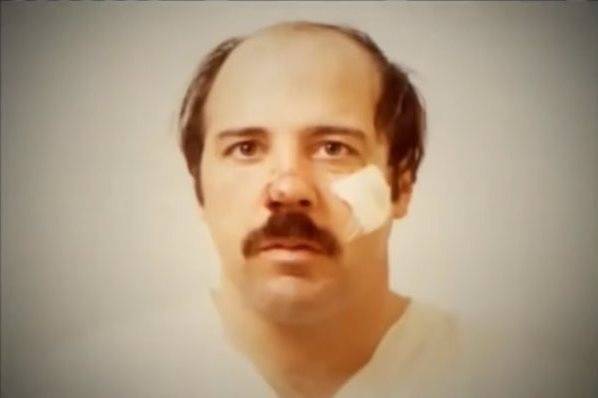
There is still no evidence, but one waitress remembers seeing Barbara with a man named Paul Stephani the night she was killed. Police soon discover that Stephani worked near the same area where the first victim, Karen Potack, was attacked.
Investigators start watching closely, hoping he will slip up. Meanwhile, Stephani picks up a sex worker named Denise Williams and offers her a ride back after they spend time together. Denise agrees but keeps a glass bottle close, just in case. When he suddenly turns down a dirt road claiming it is a shortcut, she feels something is wrong.
At the end of the road, Stephani attacks her, stabbing her in the stomach. Denise fights back with everything she has, smashing the glass bottle against his head. Her screams attract a passerby, and Stephani runs away covered in blood.
Later that night, he calls 911 again asking for medical help. The operator recognizes the voice immediately. The police track him down, and his head wound matches Denise’s description perfectly. Stephani is arrested and convicted for the murder of Barbara Simmons and the attempted murder of Denise Williams. He is sentenced to forty years in prison.
During the trial, the police are unable to connect him to the other crimes due to lack of evidence. But in 1988, while serving his sentence, Paul Stephani is diagnosed with terminal skin cancer. With only a month left to live, he confesses to the murders of Karen Potack and Kim Compton, as well as another unsolved case involving a woman named Kathy Greening, who had drowned years earlier. He says he wants to give closure to the families of his victims.
One of his 911 calls still haunts people to this day:
“I’m sorry I killed that girl. I stabbed her forty times. Kimberly Compton was the first one in St. Paul. I don’t know what’s wrong with me. I’m sick. I’m going to kill myself, I think. If somebody dies wearing a red shirt, it’s me. I’ve killed more people. I’ll never make it to heaven.”
The weepy-voiced killer remains one of the most disturbing figures in American true crime history. His voice, filled with guilt and fear, is still used in documentaries and podcasts as a chilling reminder of how real horror can sound.
Posts you may like too:
• Love in the Time of Laundry: When Empathy Feels Like a One-Sided Chore
• Unlearning the Same Patterns: How Small Steps to Self-Discovery Can Fuel Healing and Transform Relationships
• Breaking Down Guilt Trips: Why Empty Apologies Need to Stop and Why Prioritizing Self-Care is the Ultimate Shift
• When Men in Power Think They Can Take the Piss: The Exhausting Reality of Being Disrespected as a Woman
• Beyond the Surface: Navigating the Messy Truth of Self-Care and the Quiet Fury of Unspoken Anger
• Shaken to the Core: When Cruelty and Entitlement Leave You Feeling Small and Humiliated
• Beneath the Empty Words: Breaking Free from Performative Apologies and Finding Lasting Healing
• Breaking Free from Fake Apologies & Toxic Expectations: Embracing the Power of Setting Boundaries
• Breaking Free: How I Stopped Waiting for Permission to Take Up Space and Found My Voice
• The Masochist's Confession: I'm a Needy Lover, and I'm Finally Finding Someone Who Gets Me

reecehopkins473
 Quiet
Quiet
Quiet
😡 Feeling Angry •
4 months, 2 weeks ago
Trob
👍
7
😂
5
🙂
3
❤
2
😃🤝🏼
1
🤗
1
😢
1

Comments (0)
No comments yet. Be the first to support.